Ovens · Restored legacy address
Surf Report
The strangest page on the old site was three weather widgets in a row. It was also the most practical thing on it.
Among the pages Pizza Moto kept at this domain there was one called Surf Report. Its content, as captured in November 2009, was three embedded widgets and a link to Weather.com's Brooklyn page. No article, no explanation. Just the forecast, sitting on a pizza website.
It reads like leftover template furniture until you remember what the business was. In 2009 Pizza Moto had no dining room. It had a trailer, an oven and a pitch at an open-air market. Weather was not background information. It was the operating condition.
From the archive · pizzamotobklyn.com/Surf_Report.html
Three weather widgets and a link to weather.com/weather/today/Brooklyn+NY+USNY0176. The page carried no other content.
What weather does to a fire
Wind
Wind is the one that actually hurts. A wood oven's fire is drawing air through the mouth and venting through a flue, and that flow is what keeps combustion clean and the dome hot. A gusting crosswind across the oven mouth disrupts the draw: the fire surges, then stalls, then surges again. You get smoke instead of flame, soot on the dome, and a temperature that will not hold. A mobile oven is worse off than a built one, because it sits above ground level on a trailer with nothing sheltering it.
Cold
Cold does not stop a wood oven — the interior is at 800 °F and the outside air is irrelevant to that — but it changes everything around it. Firing takes longer from a cold start. Dough proofs slower, so a batch timed for a mild Saturday is underproofed on a freezing one. And the steel skin of a trailer-mounted oven sheds heat to cold air faster than masonry buried in the ground would, which is exactly why the 2009 oven was double-walled and insulated.
Rain
Rain is mostly a people problem. The oven does not care much; the crowd does. An open-air market in a downpour has no customers, and a vendor who has already fired the oven, brought the wood and pulled three days of dough out of the cold has spent the cost of the day before anyone shows up.
Humidity
Humid air slows evaporation from the crust surface, which changes how a rim sets and browns. It also changes how dough behaves in the hand. Bakers compensate by feel, and feel is exactly what you have less of when you are working outdoors at a folding table.
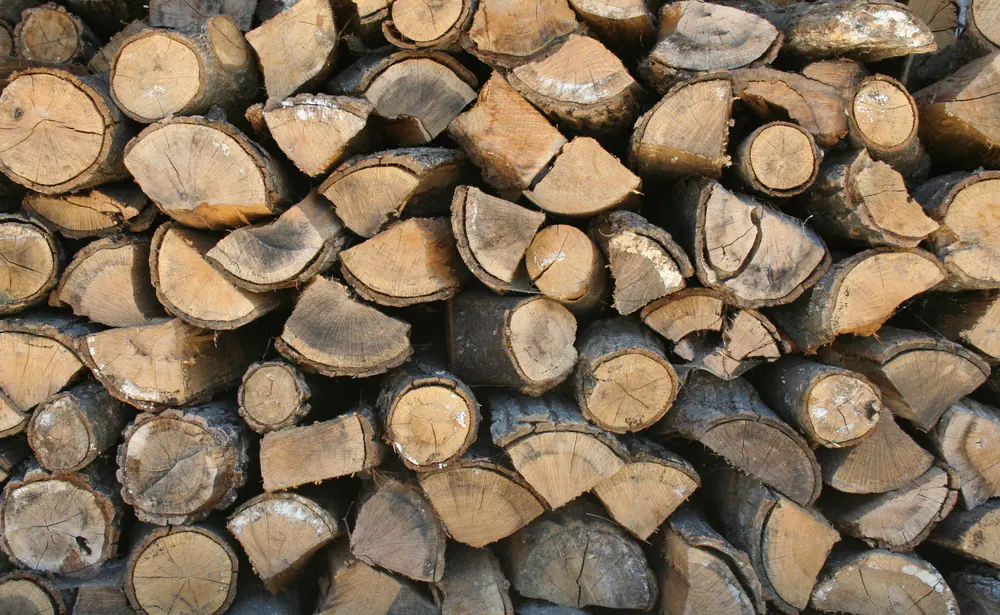

The wood is weather too
Firewood that has been rained on burns badly. Water in the wood absorbs energy as it boils off instead of heating the oven, the fire runs cooler and smokier, and soot deposits on the dome where clean flame should be scrubbing it white. Every wood-fired operator learns to read the oven's ceiling: a dome that has gone black and stays black is telling you the fire is not hot enough, and the usual culprit is the fuel.
For a fixed restaurant this is a storage question. For a trailer it is a logistics question that repeats every single week — seasoned wood, kept dry, loaded and transported alongside everything else.
Why we kept the page
We have not restored the widgets — a live Brooklyn forecast on a pizza history site would be both useless and faintly absurd. What we have kept is the address and the reason it existed, because that reason explains something real about the trailer years that the other pages do not.
Between 2008 and 2015, everything Pizza Moto did was governed by what could be towed, fired and sold outdoors in whatever weather Brooklyn produced on the day. The oven design, the small pies, the three-day dough and the market model are all answers to the same constraint. A page of weather widgets is not template clutter. It is a business telling you what it worried about.