Neighborhoods · North Brooklyn
The wood-fired north
Two neighborhoods along the East River, a decade of wood ovens, and the quiet moment in 2026 when one of the rooms that started it decided it would rather be a bar.
.jpg)
Williamsburg and Greenpoint sit end to end along the East River at the top of Brooklyn, and between about 2008 and 2015 they were where the city relearned what a wood fire does to dough. Manhattan had the coal ovens and the history. North Brooklyn had cheap industrial space, a young population, and no particular obligation to anything.
Why here, and why then
The preconditions were not culinary. They were about buildings. Williamsburg and Greenpoint had a large stock of former manufacturing space — high ceilings, heavy floors, serviceable flues, wide frontages — going cheap because the manufacturing had left. A wood-fired oven is a heavy object that needs a chimney and a fire-department sign-off, and those are much easier arguments to have in a former factory than in a retail unit under apartments.
Add the regulatory fact from the fuel explainer: coal was off the table for anything new, and gas deck ovens top out well below Neapolitan temperatures. If you wanted live fire and 900 °F in New York after 2005, wood was the only route, and north Brooklyn was where the buildings were.
Greenpoint, 2010 and 2026
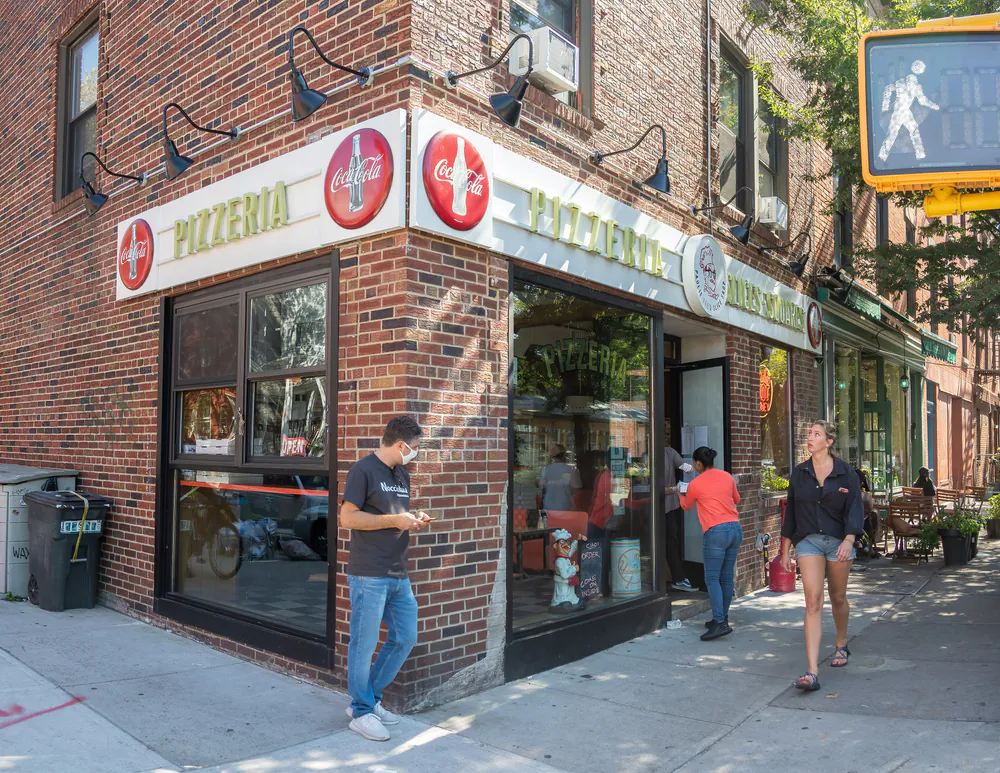
Paul Giannone opened Paulie Gee's on Greenpoint Avenue in 2010, two years after Roberta's opened in Bushwick. Together those two rooms are generally credited with turning New York into a wood-fired destination rather than a coal-and-gas town, and Paulie Gee's in particular became the friendly, maximal version of the idea — a long menu of named pies, a genuinely warm room, no attitude about any of it.
In 2024 the space was taken over by the team behind Skinny Dennis, Rocka Rolla and Turtles All the Way Down — Brooklyn bar operators rather than restaurateurs. On 4 January 2026 the Greenpoint room closed for renovation, and it reopened that March as a tavern that does not carry the Paulie Gee's name: a fifty-foot bar, booth seating, a jukebox, a pool table.
The ovens stayed. The pizzas stayed. Paul Giannone remains involved behind the scenes to keep the pizza right. What changed is what the room is for — from a place you travel to because of the pizza, to a neighborhood bar that happens to serve very good pizza.
The Slice Shop is a separate thing
Paulie Gee’s Slice Shop on Franklin Street is a different address and a different format, and it was not part of the renovation. It stayed open throughout and continues to trade under the Paulie Gee’s name. If you have read a headline about Paulie Gee’s closing, this is the distinction it was probably eliding.
It would be easy to write this up as a loss, and plenty of people did. The more interesting reading is the one the new operators were apparently making: that by 2026 the room was mostly being used as a bar that served pizza, and they simply built the thing people were already treating it as. Whether that is a capitulation or an honest response depends on what you think a destination restaurant owes to the people who made it a destination.

Williamsburg, and the churn
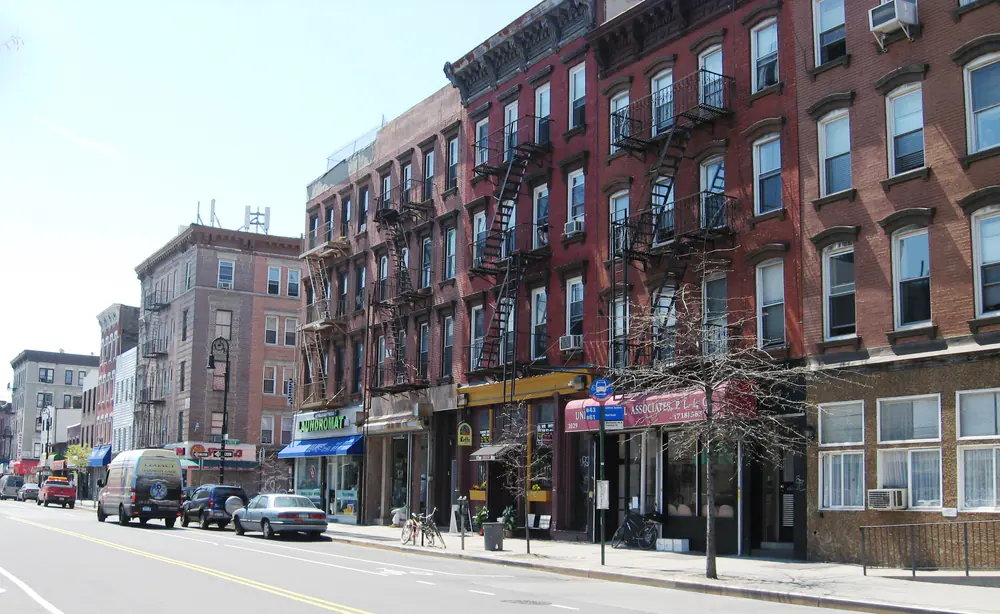
Williamsburg is the harder half to write about, because it changes faster than any description of it survives.
What is durable is the structure. Williamsburg has a very high rate of opening and closing, and a correspondingly high proportion of rooms that are testing something. That produces genuine experimentation — natural-wine pizzerias, sourdough-forward pies, formats borrowed from Rome and Naples and Detroit and recombined — and it produces a lot of places that do not last two years.
We are deliberately not publishing a list of currently open Williamsburg pizzerias. We do not verify hours or status on the ground, a list like that would be wrong within months, and there are better-resourced people doing it continuously. What we will say is what to look for: this is the part of Brooklyn where the format is most likely to be the point, and where a menu is most likely to be arguing with you about what pizza is. Sometimes that is exhilarating and sometimes it is a tasting menu with a wood oven. Both are on offer.

What the north taught the rest
Two things, and they outlived the individual rooms.
The first is that a wood oven is a viable business in New York, not just a nostalgia object. Before 2008 the live-fire pizzerias in this city were inherited coal ovens. After 2010 a wood oven was something you could specify, install and pay for.
The second is the slice shop as a deliberate second act. Paulie Gee's Slice Shop, and the dozens of counter-service rooms that followed the same logic, established that a serious pizza operation could run a high-volume, low-ceremony format alongside the destination one without either cannibalizing the other. F&F in Carroll Gardens is the same instinct built from scratch.
And there is a third thing, which is the reason this site exists at all. In 2008, if you wanted a wood oven and could not afford a building in Williamsburg, you could build one on a trailer and take it to a market. That is precisely what Pizza Moto did, in the same years and for the same reasons, and the oven it ended up with is more interesting than most of the ovens in the buildings.