Neighborhoods · Bushwick
Bushwick
The most influential pizzeria of the last twenty years opened in a neighborhood that had no reason to have one. That was the point.
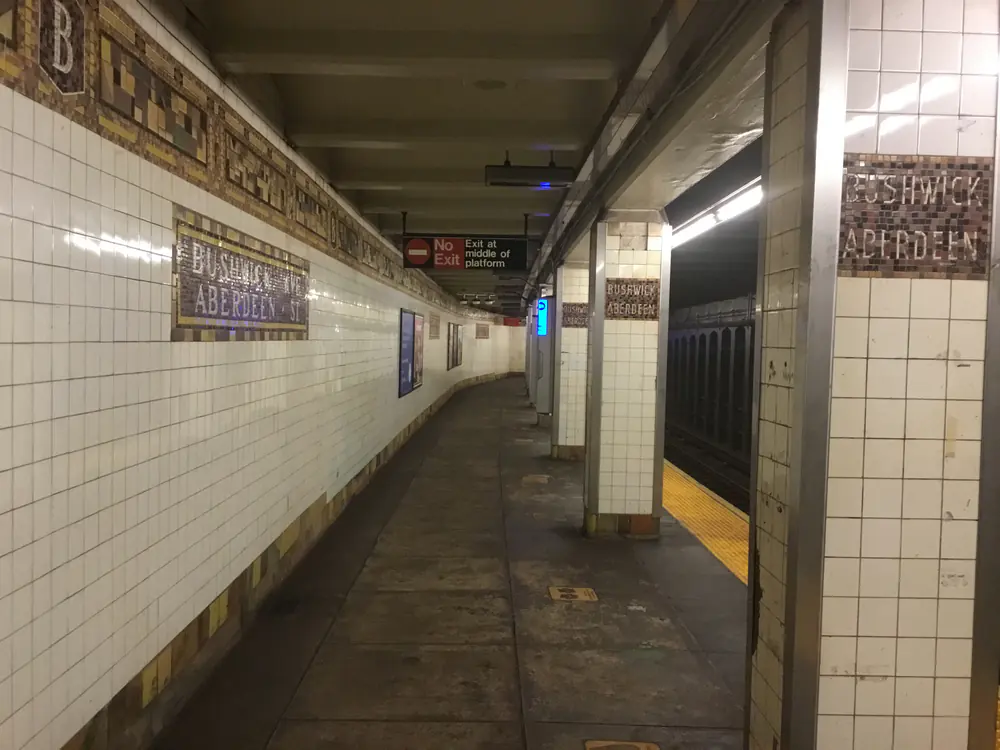

In 2008, a wood-fired oven went into a cinder-block building on Moore Street in Bushwick, in a part of Brooklyn that had essentially no restaurant economy. The place was Roberta's, and the decision looks obvious now only because of what happened next.
What made it possible
The same thing that made the rest of north Brooklyn possible, but more so: cheap industrial space in a neighborhood that had been manufacturing and then had not been anything in particular for a while.
A wood oven is a demanding tenant. It is heavy, it needs a flue, it needs fuel storage, it needs a fire-department sign-off, and it needs a landlord who will let you cut a hole in the roof. In 2008 Bushwick had buildings where all of that was negotiable and rent that let you be wrong for a year while you worked it out.
That last part is underrated. Cheap rent does not just lower costs — it buys time to be bad at something before you are good at it. Almost every interesting food business of that period had a period of being not very good, in public, that it survived only because the rent was low enough to make survival possible.
What it actually changed
Roberta's is usually credited with the wood-fired revival, which is half right — Lucali had opened in 2006 and Paulie Gee's followed in 2010. What Roberta's specifically established was something broader than pizza.
It demonstrated that a restaurant did not have to go where the customers already were. It could go where the space was, do something worth the trip, and let the customers come to it. That is now such a standard assumption about New York dining that it is hard to remember it was a gamble. In 2008, opening a destination restaurant a long walk from the L train in Bushwick was not a strategy anybody would have recommended.
The second thing it established was the informal register. Cinder block, plywood, picnic benches, a garden out the back, a radio station in a shipping container. None of that was a design scheme in the ordinary sense; it was what the budget produced. It then became a design scheme, copied at considerable expense in cities that had no particular reason for it, which is the usual fate of anything that works.

Where it went
Roberta's scaled — additional locations, a Manhattan pizzeria near Madison Square Garden, a frozen-pizza line in supermarkets. That is a completely different business from a cinder-block room with a wood oven, and it is the standard trajectory for anything that works this well in New York.
It is worth saying plainly that this is not a betrayal of anything. The original constraint — cheap space, cheap rent, room to be wrong — was a phase, not a philosophy, and it stopped existing in Bushwick some years ago for reasons that have nothing to do with pizza. A business that stayed exactly as it was in 2008 would now be paying 2026 rent for a 2008 idea.
The sourdough afterward
The more interesting current thread in Bushwick is not the wood-fired one but the fermentation one. Ops, in particular, has built a reputation on sourdough-leavened pies — the leavening as the identity rather than the oven.
That is a real shift in where the craft argument sits. The 2008–2012 conversation was about heat: get the oven hot enough and the fire live enough and the pizza follows. The conversation since has moved backwards down the process into the dough — hydration, time, starter, flour — which is, not coincidentally, where Pizza Moto was already working in 2009 with a wild-yeast starter cultured off local apples.
Both arguments are correct and they are the same argument seen from two ends. As we set out in The Dough, the reason a long ferment matters is precisely that a ninety-second bake gives the crust no time to develop color unless the sugars are already there. Heat without fermentation gives you a pale, tough rim. Fermentation without heat gives you flavor and no blister. You need both, and the two neighborhoods that argued about which mattered more were arguing about a false choice.
What we are not doing here
No list of currently open Bushwick pizzerias, no hours, no addresses beyond the historically fixed ones. Bushwick has a fast turnover and we do not verify status on the ground — see editorial policy. What we can tell you is what the neighborhood did to the food, which does not go stale.