Neighborhoods · Red Hook
Red Hook and the road that cut it off
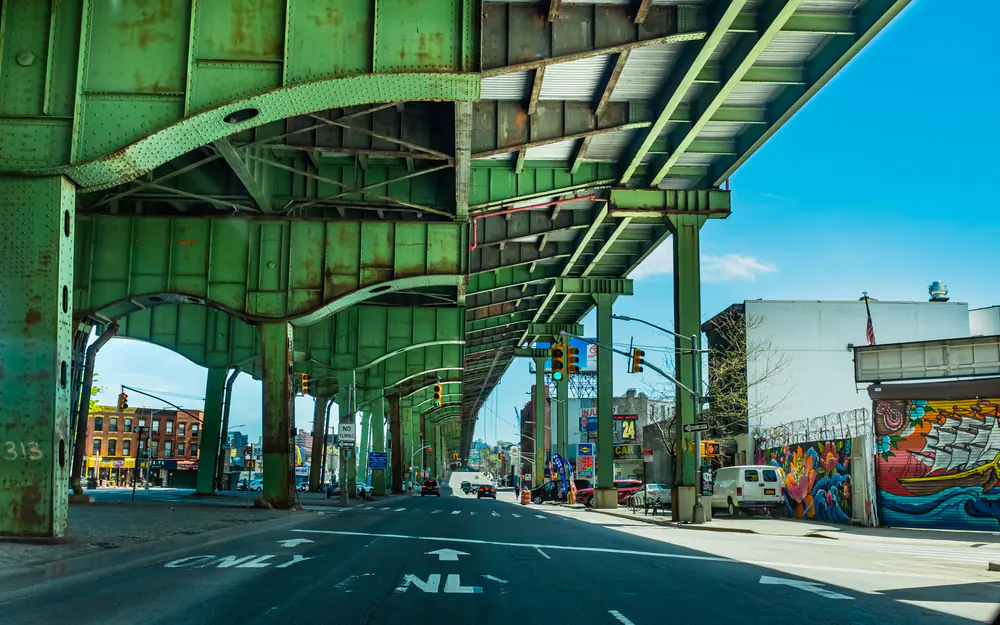
An elevated highway runs down Hamilton Avenue and separates Red Hook from everything north of it. The buildings underneath it are cheap, awkward, and one of them had a century-old pizza oven sealed inside a wall.
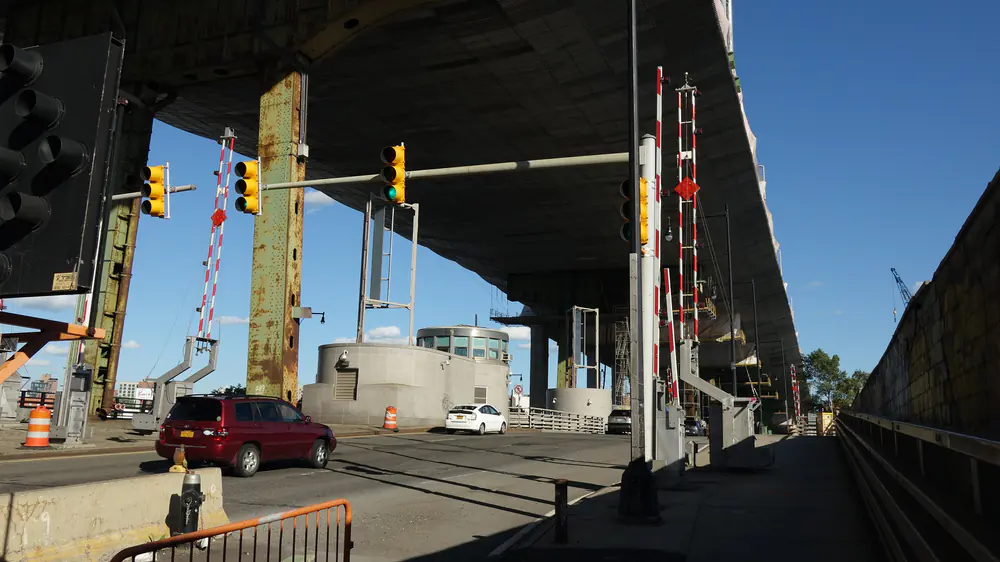

Red Hook is a peninsula that sticks into New York Harbor, and for most of its history that was the entire point. It was a working port — grain, coffee, shipping — and the neighborhood existed to serve it. Then two things happened that had nothing to do with the water, and between them they made Red Hook what it is now: isolated, cheap for a long time, and architecturally strange.
The road
The first was the elevated expressway. The Gowanus Expressway runs above Hamilton Avenue, and where it passes over the Gowanus Canal it becomes, in effect, a lid. North of it: Carroll Gardens, brownstones, a subway. South of it: Red Hook, no subway at all, and a walk under a dark elevated roadway to get to either.
That severance is the single most important fact about the neighborhood. It is why Red Hook stayed industrial and affordable decades after the rest of brownstone Brooklyn did not, why the nearest train is a long walk, and why the stretch of Hamilton Avenue directly beneath the roadway is lined with the kind of low, deep, unglamorous buildings that nobody converted into apartments.
The water
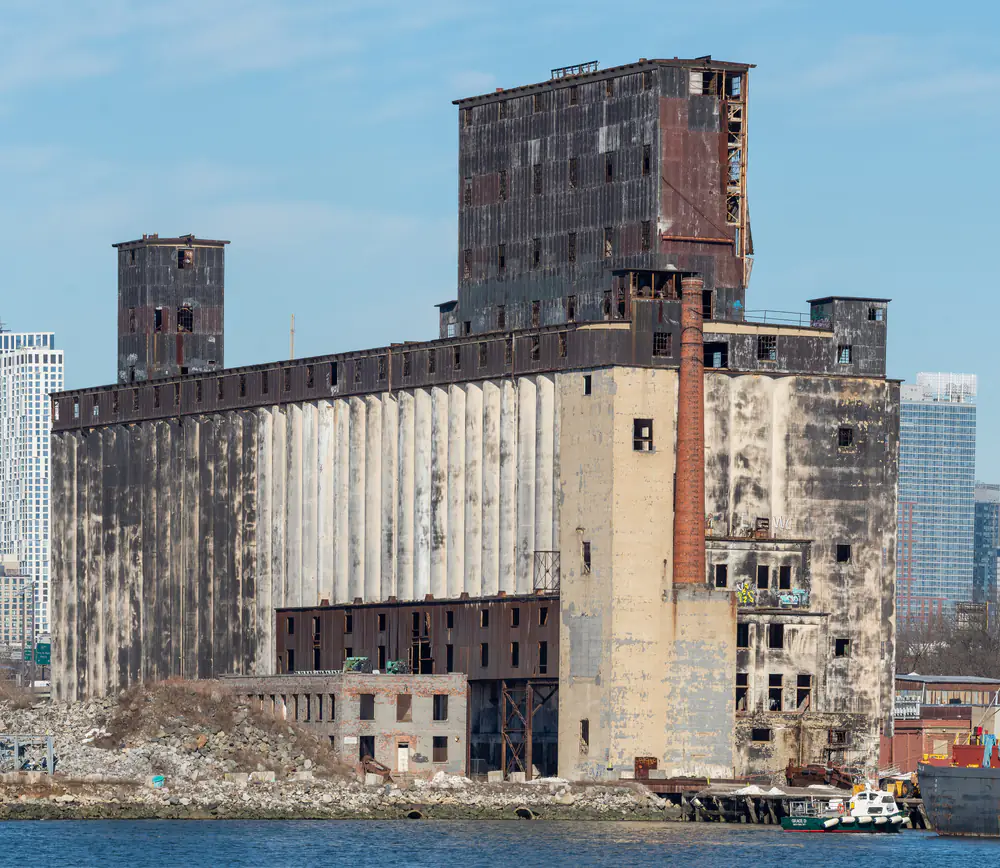
The second was the container. Red Hook's port ran on break-bulk cargo — goods loaded piece by piece by very large numbers of longshoremen. Containerization moved that work to purpose-built terminals with deep water and rail access, most of it across the harbor in New Jersey, and the piers emptied out.
The Red Hook Grain Terminal, a vast reinforced-concrete silo built to move grain between barge and ship, has stood disused since the 1960s. It is visible from most of the neighborhood and from the water, and it is the clearest monument the borough has to the economy that left.
.jpg)
338 Hamilton Avenue
Which brings us to one address on that severed avenue, and to what was inside it.
In roughly 2013, Dave Sclarow took an abandoned storefront at 338 Hamilton Avenue, between Centre and Mill Streets, directly underneath the expressway. He was looking for a permanent home for Pizza Moto, which had spent five years working markets out of a trailer with a hand-built wood oven.
During the build-out, behind the sheetrock, they found a massive turn-of-the-century oven.
Consider what that means about the building. An oven of that size is a commercial bread oven, built into the structure, probably around the time the neighborhood was at its industrial peak. Somebody built it, somebody ran a bakery in it, the bakery closed, and at some point somebody else put a wall across the front of it and the building carried on being other things. Time Out's 2015 listing records that one of those other things was a cigar maker.
Nobody demolished the oven, because demolishing a masonry oven built into a party wall is expensive and walling it off is free. It sat there, sealed, for decades — which is exactly the kind of thing that survives in a neighborhood the expressway made too awkward to redevelop.
What they did with it
Sclarow restored the masonry and the original cast-iron details, and converted the oven from coal to wood. That conversion is the part worth dwelling on. The oven was built for anthracite, which is what commercial ovens burned when it was made. New York no longer permits new solid-fuel coal installations, so reinstating the original fuel was not an option. The body was restored; the fire had to change. We take the fuel question apart in coal, wood, gas and deck.
The restoration took about two years, much of it owner-performed — plumbing, welding and electrical included. The rest of the room was assembled from Brooklyn salvage in a way that reads as a thesis about the neighborhood: bar stools welded from discarded Red Hook public-school desks, tables built from bowling-alley wood, a bar of reclaimed soapstone.
The restaurant opened in October 2015 with Sclarow and Anna Viertel as chef-owners, and ran until its last service on 19 February 2023, when the lease came up.
.jpg)
The address since
The oven kept working. In August 2023, Farina opened in the space — a southern-Italian, grandma-style pizzeria from Tony Pisaniello, who by contemporary accounts took the lease substantially because of what was in the wall. Farina closed in 2025.
In late 2025, chef Chris Milazzo and partner Sean Klim hoped to take the former Farina space for Bad Cholesterol. The deal fell through, and they opened on Van Brunt Street in October 2025 instead. We have found no confirmed tenant at 338 Hamilton Avenue since, and we are not going to invent one.
Where Red Hook actually ends
338 Hamilton Avenue gets described as Red Hook and as Carroll Gardens, sometimes in the same article. Both are defensible — it sits on the boundary, on the Red Hook side of a line that the expressway itself effectively draws. We say “the Red Hook side of Carroll Gardens” and leave it there. For what is north of the road, see Carroll Gardens.
The general point
The thing worth taking from Red Hook is not the pizza. It is the mechanism. Infrastructure that makes a place inconvenient also makes it cheap, and cheap places keep their old equipment because nobody can afford to care about the real estate. A century-old bread oven survived behind a wall on Hamilton Avenue for the same reason the Grain Terminal is still standing: taking it out was never worth what the site was worth.
Then the rent catches up, as it did in February 2023, and the thing that survived the neglect does not survive the recovery. That is the whole story of a lot of Brooklyn, and this address happens to tell it unusually clearly.